
Driving laws Greece for Americans, Driving in Greece as an American is generally manageable, but the rules changed significantly in late 2021 and again with a major traffic code overhaul in 2025/2026.
Driving laws Greece for Americans, Here is everything you need to know to stay legal and safe on Greek roads.
Driving laws Greece for Americans. License Requirements: Do You Need an IDP?
The law officially changed in November 2021, making things much easier for Americans.
- Standard U.S. License: You can legally drive and rent a car in Greece using just your valid U.S. State Driver's License, provided your stay is less than 6 months.
- The "IDP" Catch: While the law no longer requires an International Driving Permit (IDP) for Americans, athenscars do follow the Greek law and do not ask for IDP But some OTHER local rental agencies (especially on smaller islands) may still ask for one. * Recommendation: Do not reserve a car with such an agency!
Driving laws Greece for Americans. Key Rules of the Road
- Side of the Road: Greeks drive on the right, just like in the U.S.
- Roundabout Priority (The "Greek Rule"): This is the most confusing rule for Americans. In Greece, unless there is a "Yield" or "Stop" sign, traffic entering the roundabout has the right of way, and those already inside must stop. However, many modern roundabouts now have signs giving priority to those inside—always look for the sign.
- The "Shoulder" Lane: On major highways (National Roads), it is customary to drive partially on the paved shoulder to allow faster cars to pass you. If someone flashes their lights behind you, they want to overtake.
- Horns: In urban areas, using your horn is technically illegal unless it's to avoid an accident (though you will hear it constantly).
Driving laws Greece for Americans. Speed Limits & New 2026 Laws
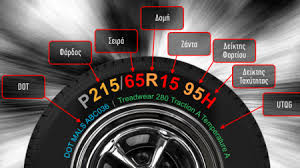 Greece recently introduced a "New Road Traffic Code" with stricter urban limits:
- Urban Areas: Now 30 km/h (18 mph) on most single-lane city streets; 50 km/h (31 mph) on main city arteries.
- Open Roads: 90–110 km/h (56–68 mph).
- Motorways: 130 km/h (80 mph).
- Cameras: Greece has significantly increased the number of automated speed cameras. Fines are now digital and linked to rental records.
Driving laws Greece for Americans. Alcohol and Safety
- Blood Alcohol Limit: The limit is 0.05% (lower than the U.S. 0.08%). For drivers with less than 2 years of experience, it is a strict 0.02%.
- Mandatory Equipment: Your car (including rentals) must have a warning triangle, fire extinguisher, and first aid kit.
- Seat Belts: Mandatory for all passengers. Fines are steep (approx. €350).
- Cell Phones: Use is strictly prohibited unless you are using a hands-free Bluetooth system.
Driving laws Greece for Americans. Parking
- License Plate Confiscation: This is a unique Greek penalty. If you park illegally, the police may not just give you a ticket; they may physically remove your license plates. You then have to pay the fine at a local post office or bank to get them back.
- No Parking Zones: Indicated by a yellow line on the curb or a blue sign with a red circle and a single/double slash.
 To help you navigate the unique (and sometimes chaotic) driving environment in Greece, here is a visual guide to the signs you'll encounter and practical tips for the narrow roads on the islands.
Driving laws Greece for Americans. Essential Greek Road Signs
Most signs follow international standards (Vienna Convention), so they will look familiar, but the "Prohibition" signs are the ones that usually catch Americans off guard.
| Sign Shape | Meaning | What to Look For |
| Red Triangle | Warning | Alerts you to hazards like sharp curves, falling rocks, or goats. |
| Red Circle | Prohibition | Must Not Do. A red circle with a car and motorcycle means "No Motor Vehicles." |
| Blue Circle | Mandatory | Must Do. Usually shows an arrow indicating the only direction you can go. |
| Yellow Diamond | Priority Road | You have the right of way at intersections until you see the same sign with a black slash. |
| Stop (Octagon) | Stop | Identical to the U.S. sign. In Greece, these are often treated as "Yield" signs by locals, but you should stop completely to avoid heavy fines. |
Important Symbols-Driving laws Greece for Americans
- The "No Entry" Sign: A red circle with a horizontal white bar. Do not enter—often found at the exit of one-way streets.
- The "Priority over Oncoming Traffic" Sign: A blue square with a white and red arrow. If your arrow is white, you go first through a narrow passage.
- The "End of All Restrictions" Sign: A white circle with diagonal black grey lines. This means previous speed limits or "no passing" zones no longer apply.
Driving laws Greece for Americans. Tips for Narrow Island Roads
Driving on islands like Santorini, Crete, or Naxos is very different from the Greek mainland.
 The "Honk Before the Curve" Rule: On extremely narrow, blind mountain curves, give a quick, light tap of your horn. This lets oncoming drivers (who might be in the middle of the road) know you are coming.
 Folding Mirrors: When parking on a narrow street, always fold in your side mirrors. Passing cars and scooters often come within inches of parked vehicles.
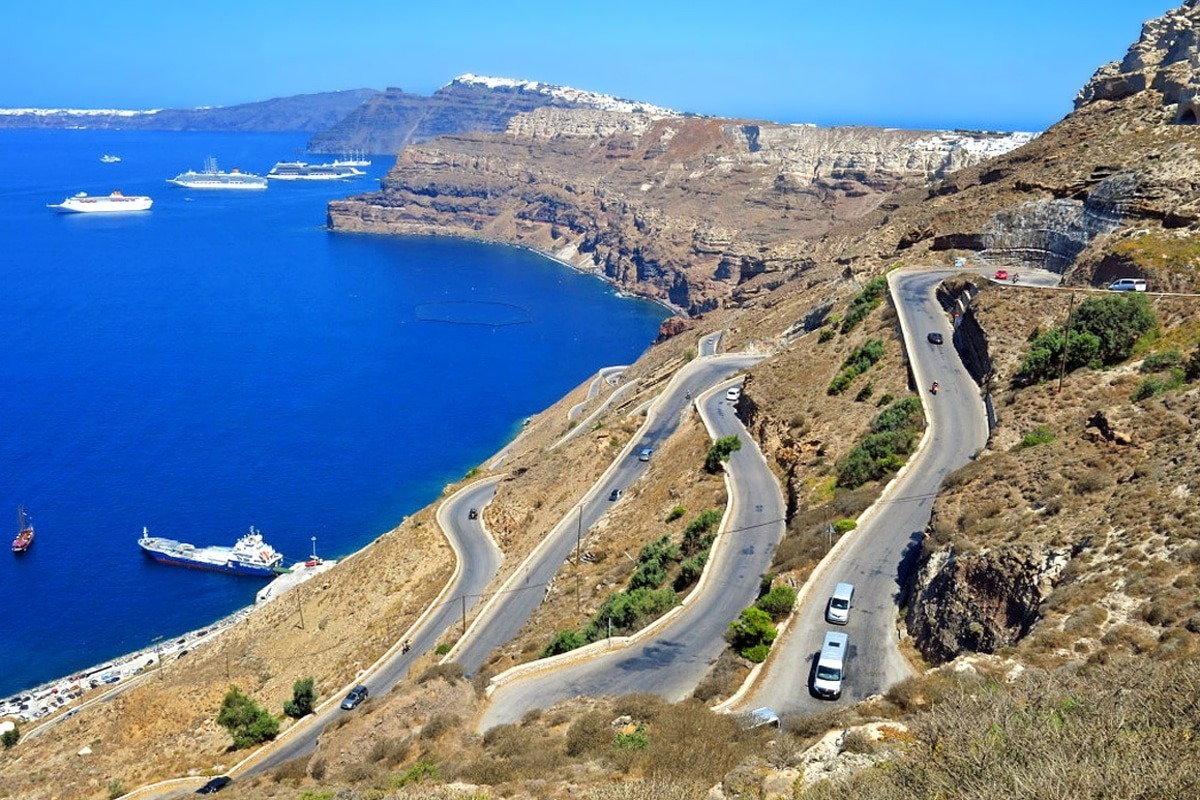 The up hill or down hill driving may be dangerous when you do not drive with care!Yield to the "Up" Driver: On steep, one-lane hills, the driver going uphill generally has the right of way, as it is harder for them to restart. Be prepared to reverse into a "passing pocket" (a wider part of the road).
- Watch for Livestock: Goats and sheep own the roads in rural areas. If a herd is crossing, just stop and wait—they will eventually move.
- Gas Station Etiquette: Most gas stations are full-service. You stay in your car; a不管 attendant will fill it for you. Many close by 7:00 PM or 8:00 PM on islands, and few are open on Sundays.
- Driving laws Greece for Americans
Driving laws Greece for Americans. Renting as an American
- Size Matters: Rent the smallest car that fits your group. A large SUV is a nightmare in narrow village alleys and nearly impossible to park.
- Manual vs. Automatic: 90% of Greek rentals are manual (stick shift). If you need an automatic, book it months in advance, as they are limited and more expensive.
- The "Ferry Rule": Most rental companies prohibit taking the car on a ferry to another island. Even if they allow it, the insurance usually doesn't cover the car while it's on the water. It’s almost always better to rent a fresh car on each island.